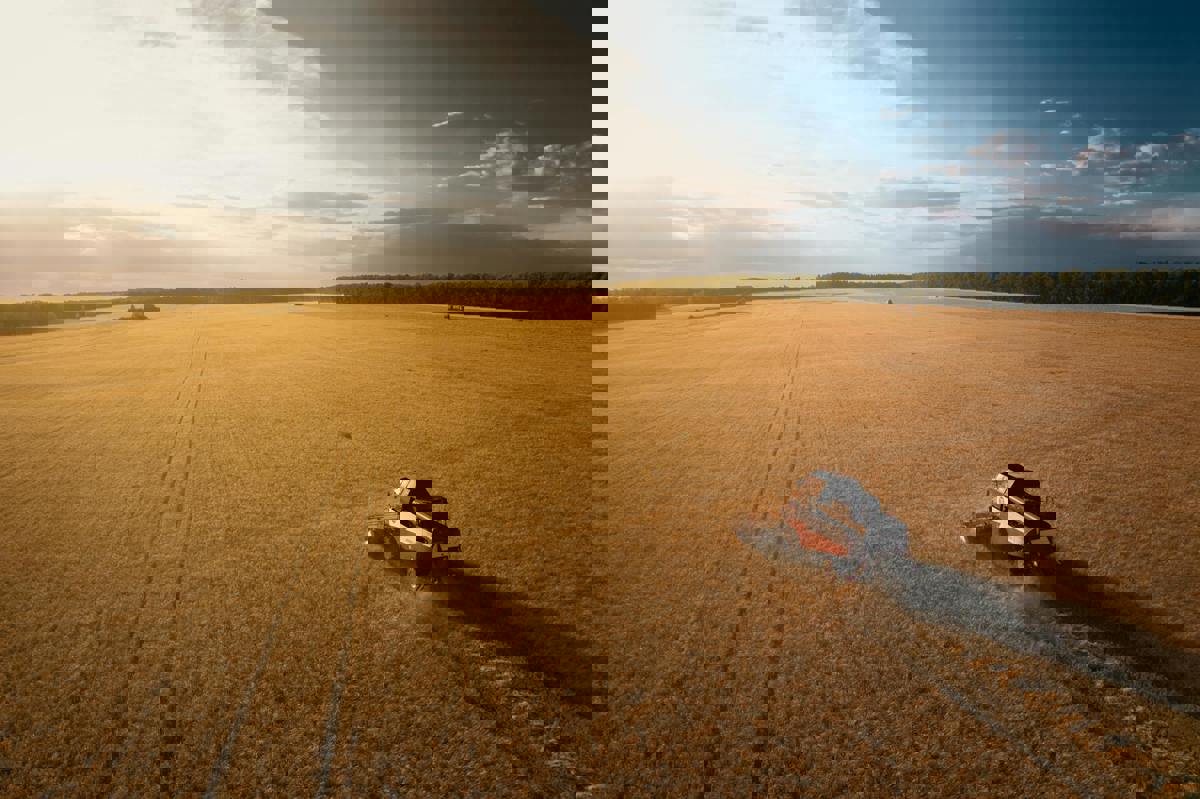
Artificial intelligence is finding fertile ground on the Canadian prairies, as grain farmers increasingly embrace smart technologies to revolutionize their agricultural practices. AI-powered farming equipment, ranging from autonomous tractors to intelligent drones, is being adopted at an accelerating pace. Experts say these innovations are fundamentally transforming how prairie grain producers operate, helping them boost productivity in the face of rising costs and unpredictable weather patterns.
The adoption of AI technology marks a significant shift in how traditional farming tasks are carried out. Automated planters and harvesters equipped with machine learning algorithms now collect and analyze vast amounts of real-time data from the fields. According to agri-tech analyst Sheila Wong, "AI is a game-changer for the prairies, enabling farmers to plant, fertilize, and monitor crops with unprecedented precision and efficiency."
Farmers on the prairies are especially drawn to the promise of improved yields and resource savings. Automated planting systems leverage AI to assess soil conditions, optimize seed placement, and reduce waste. This targeted approach allows for more uniform crop emergence and healthier plant growth. As Mark Preston, a Saskatchewan wheat farmer, explains, "We’re seeing fewer overlaps and missed spots, which means less seed wasted and higher overall yields."
Drones have emerged as a central player in this technological evolution. Outfitted with sophisticated sensors and AI-powered imaging systems, these aerial machines survey vast tracts of land in a fraction of the time it would take on foot. They provide farmers with highly detailed maps of crop health, pest infestations, and moisture levels. This enables timely interventions and supports precise decision-making on fertilizer and pesticide applications.
The data generated by AI-oriented equipment is often integrated into digital farm management platforms. These platforms consolidate information from tractors, drones, and other sources, offering a comprehensive picture of field conditions. With a few taps on a tablet or smartphone, producers can adjust equipment settings remotely, track progress, and identify issues before they escalate—saving both time and money in the process.
Canadian Prairie provinces—Alberta, Saskatchewan, and Manitoba—are embracing these changes enthusiastically. Recent studies indicate that more than 40% of large-scale grain producers in these regions have adopted at least one form of automated or AI-driven equipment, a figure expected to rise steadily. The shift is partly driven by competitive pressures, as global commodity markets demand ever-greater efficiency to thrive.
Labour shortages are another key factor motivating the transition to AI-powered machinery. Younger generations are less likely to pursue traditional farming careers, making it difficult for family operations to sustain manual workloads. Autonomous vehicles and robotics fill these gaps, reducing dependency on seasonal labor and allowing fewer workers to manage larger acreages. This streamlining offers a lifeline for many smaller operations struggling to stay viable.
The climate crisis has amplified interest in AI’s potential to make agriculture more resilient. Unpredictable weather events and shifting growing seasons require rapid adaptation. AI-driven climate models and predictive analytics are helping producers anticipate challenges like drought, floods, or late frosts, allowing them to modify their practices on the fly. As a result, yields are generally more stable and losses are mitigated even in difficult years.
Environmental sustainability is another compelling advantage of AI adoption on prairie farms. Precision agriculture minimizes over-application of fertilizers and chemicals, reducing runoff into local waterways and lessening the sector’s ecological footprint. Studies by Agriculture and Agri-Food Canada indicate that smart farming practices could cut chemical usage by as much as 20%, contributing to cleaner rivers, healthier soils, and greater biodiversity in the region.
Cost, however, remains a concern for smaller producers. The initial investment in AI-enabled machinery can be substantial, often running into hundreds of thousands of dollars. While government grants and industry incentives are available, access is sometimes limited or administratively complex. Some farmers report forming cooperatives or sharing equipment as a cost-effective entry point into digital agriculture.
Training and digital literacy are necessary components of a successful transition to AI-powered systems. Industry groups are working closely with educational institutions to offer workshops, certifications, and hands-on demonstrations for farmers. These initiatives are critical, says agronomist Thomas Berger, "because technology is only as effective as the people operating it. Bridging the digital knowledge gap is essential for long-term success on the prairies."
Beyond economic and agronomic benefits, AI tech is also reshaping the day-to-day life of prairie grain producers. Smart devices automate time-consuming manual tasks, freeing up operators to focus on strategic issues such as farm planning and marketing. For many, this shift has improved work-life balance and made farming a more attractive and sustainable career path for the next generation.
Looking ahead, the consensus among experts is that AI will continue to reshape prairie agriculture at a rapid pace. Innovations on the horizon include fully autonomous combine fleets, advanced disease forecasting tools, and enhanced supply chain integration. As prairie farmers continue to adopt and adapt to these new technologies, they are not just increasing their yields—they are paving the way for a smarter, more sustainable agricultural future across Canada’s finest grain-growing regions.